Amsterdam
Rewilding and enchanting
P////akt Foundation
Amsterdam The Netherlands
Curator, Masha Domracheva
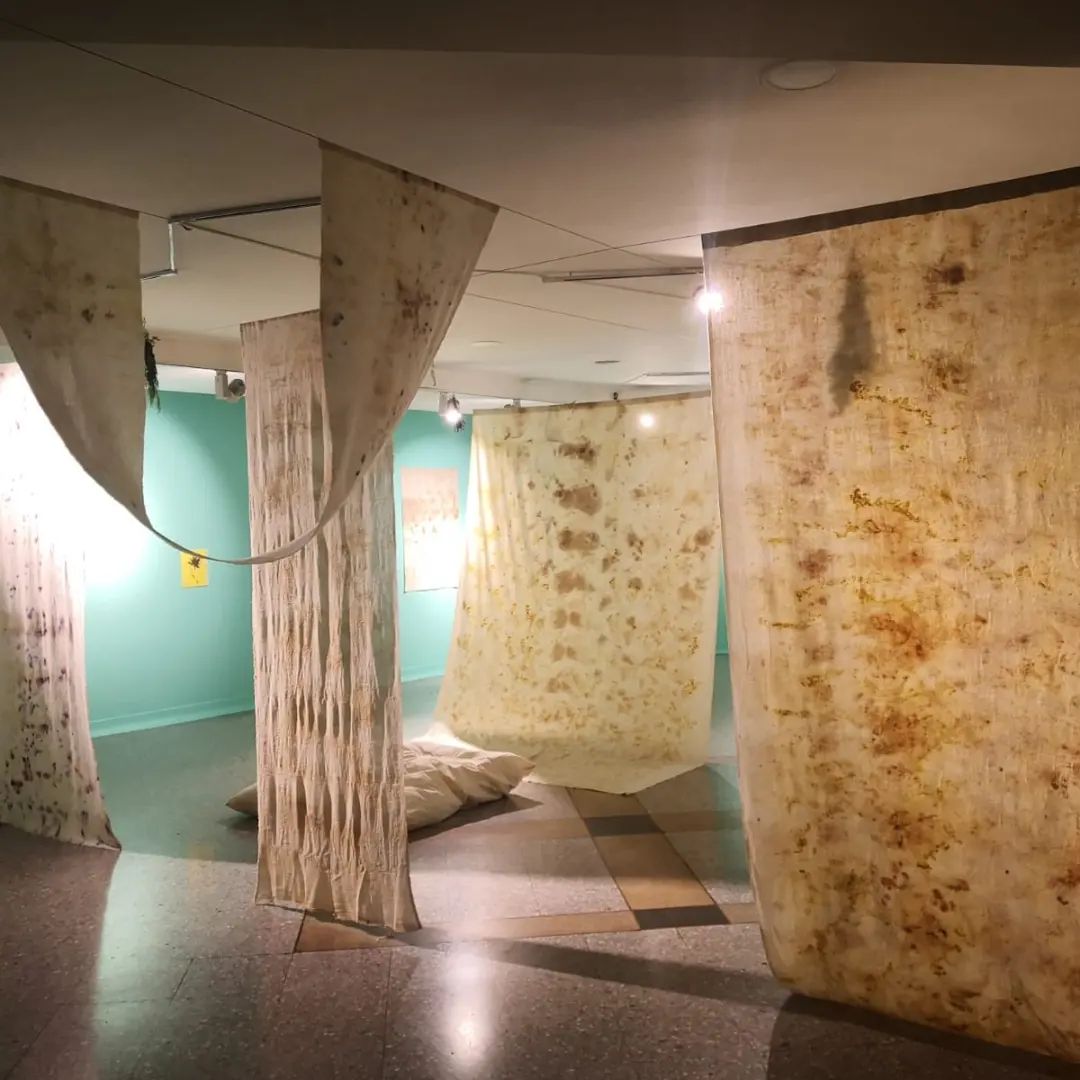
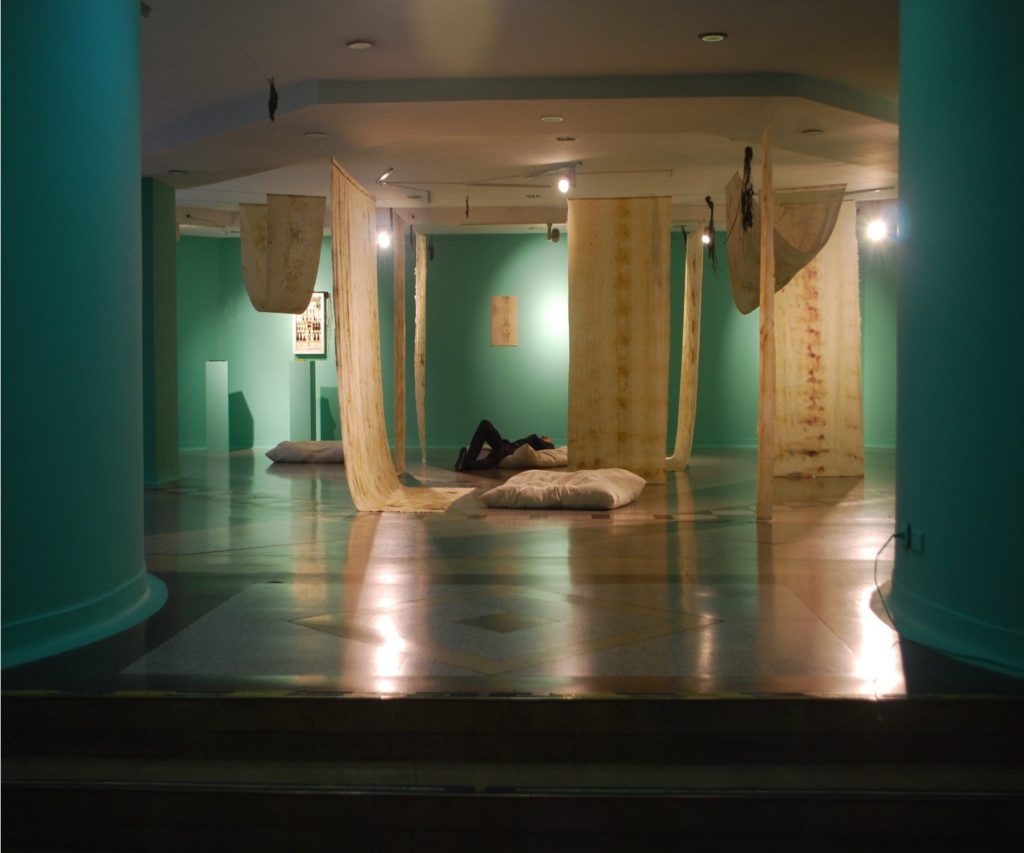
Instalación, Acción ritual
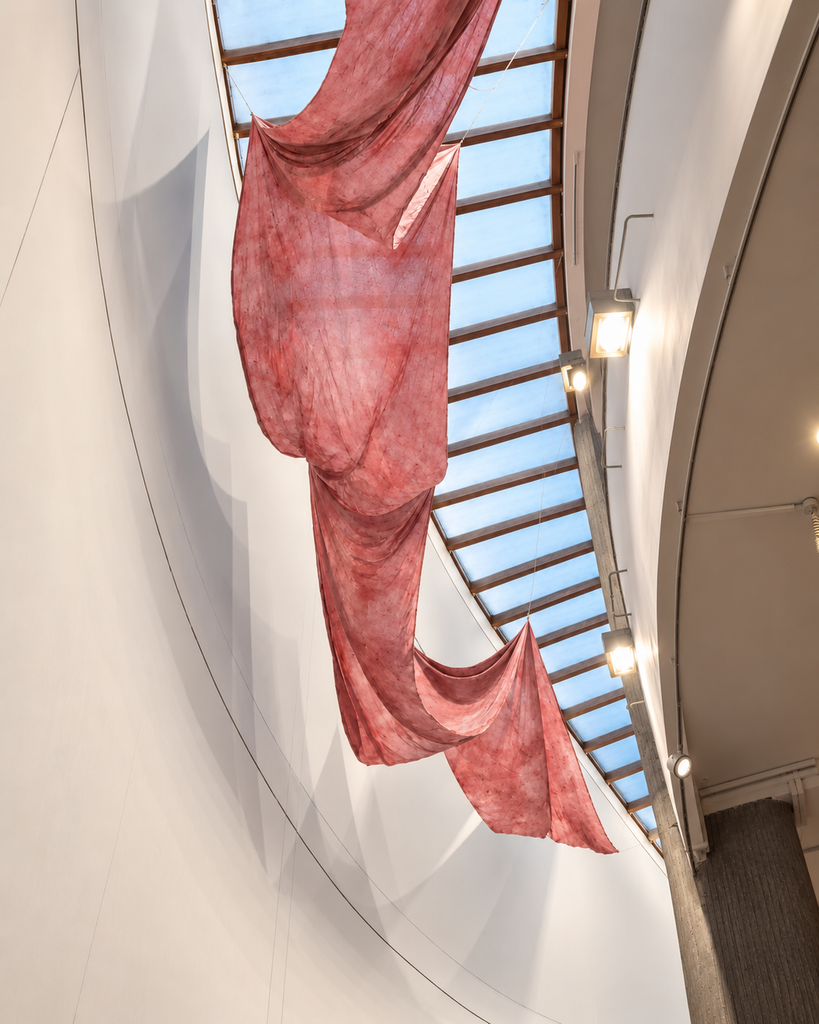
10 metros cuadrados por 4 de alto
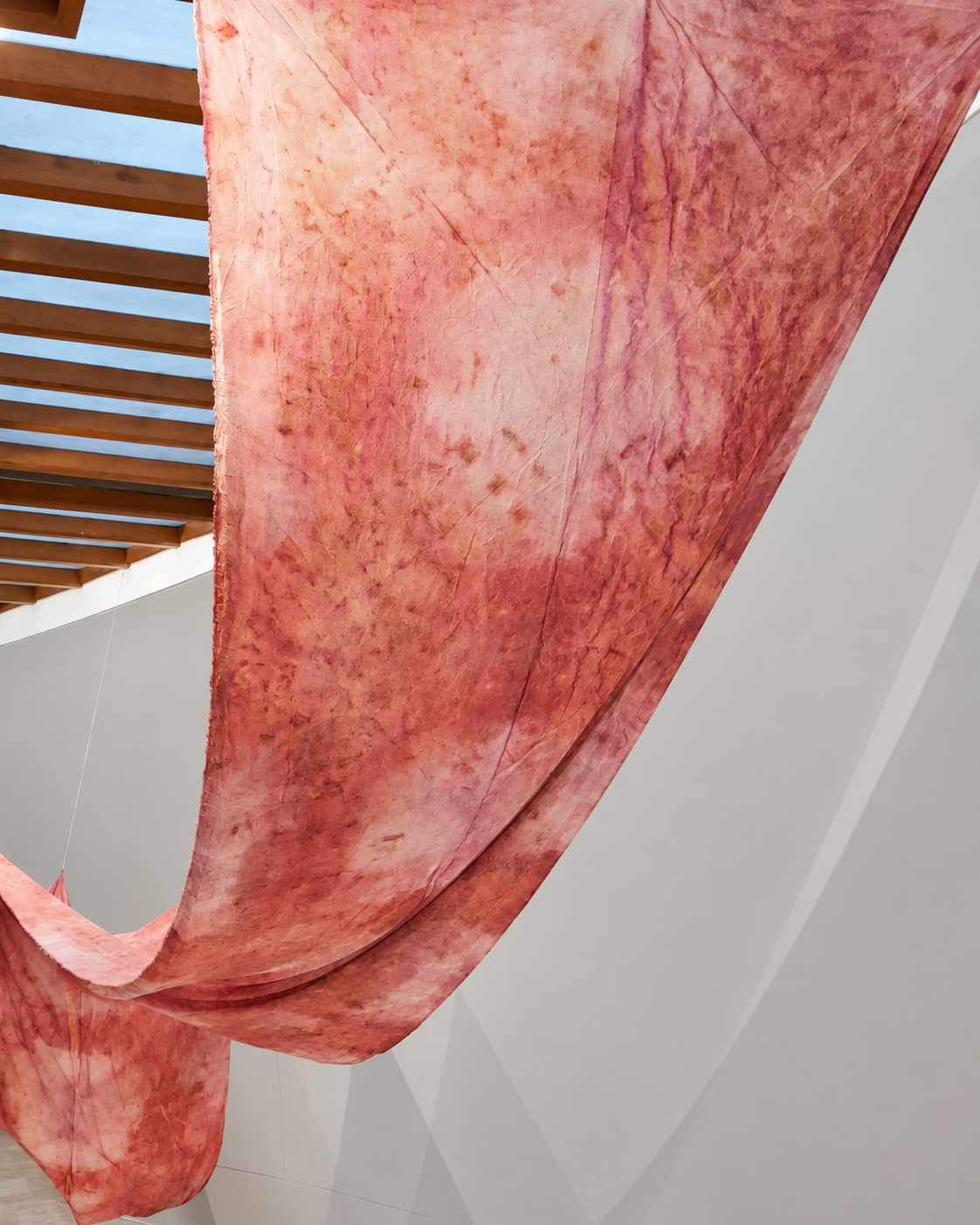
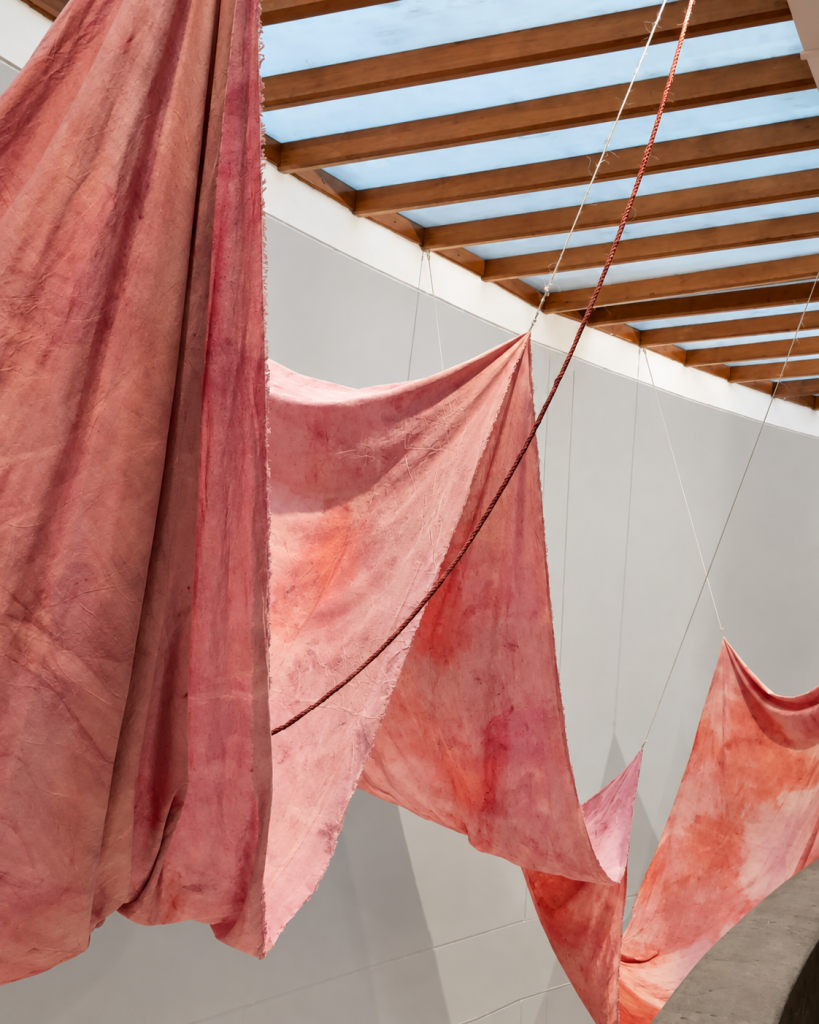
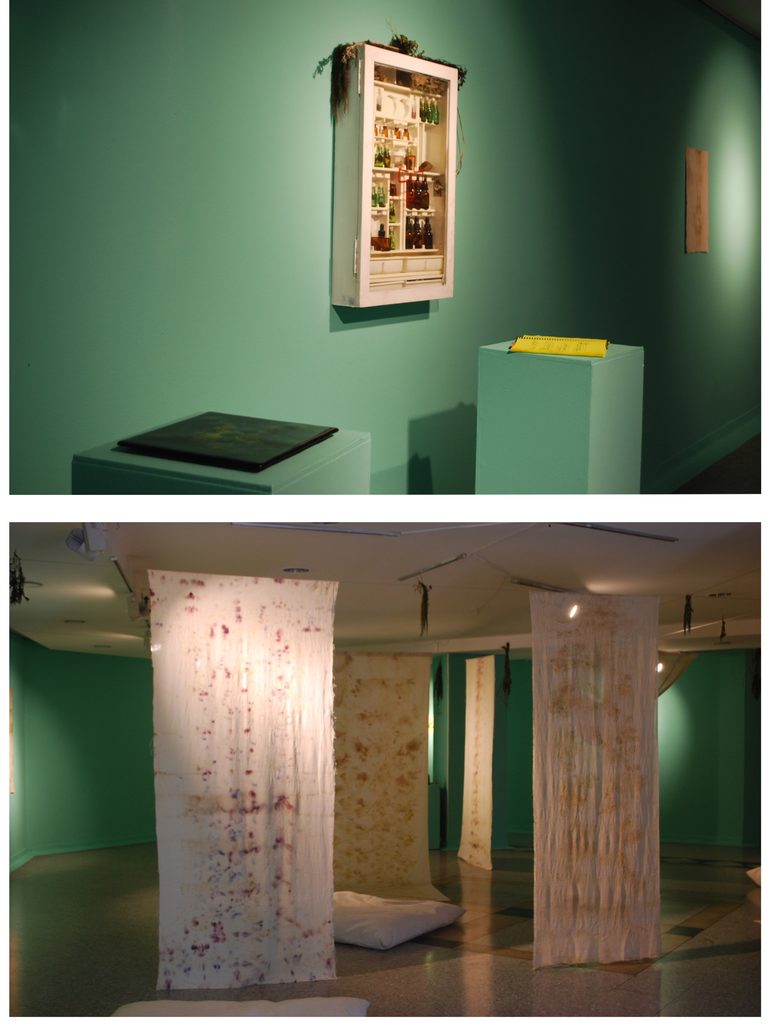
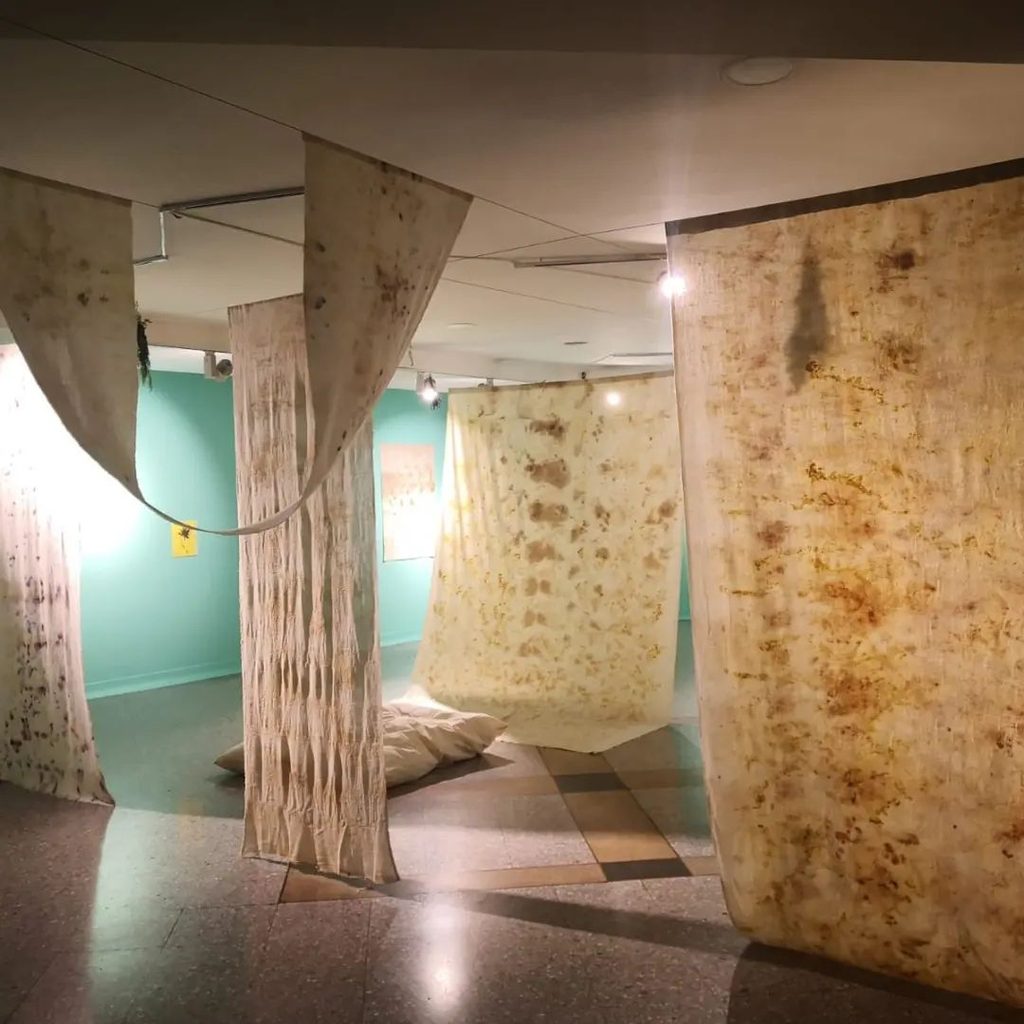
Telas de algodón, 108 acuarelas sobre papel, tierra, tejido en palma, frutas, texto sobre la pared, pinturas sobre cartulina negra
Instalación con 52 acuarelas de plantas del centro de México círculo interior y 52 acuarelas del territorio Maya, Circulo exterior, dispuestas en circulos de trece cuatro telas a modo de velas creando un espacio ritual en el centro con tierra y una cuerda suspendida para cubrirse.
7 dibujos y pinturas alusivas a tlazolteotl de 45 cm x 35v cm


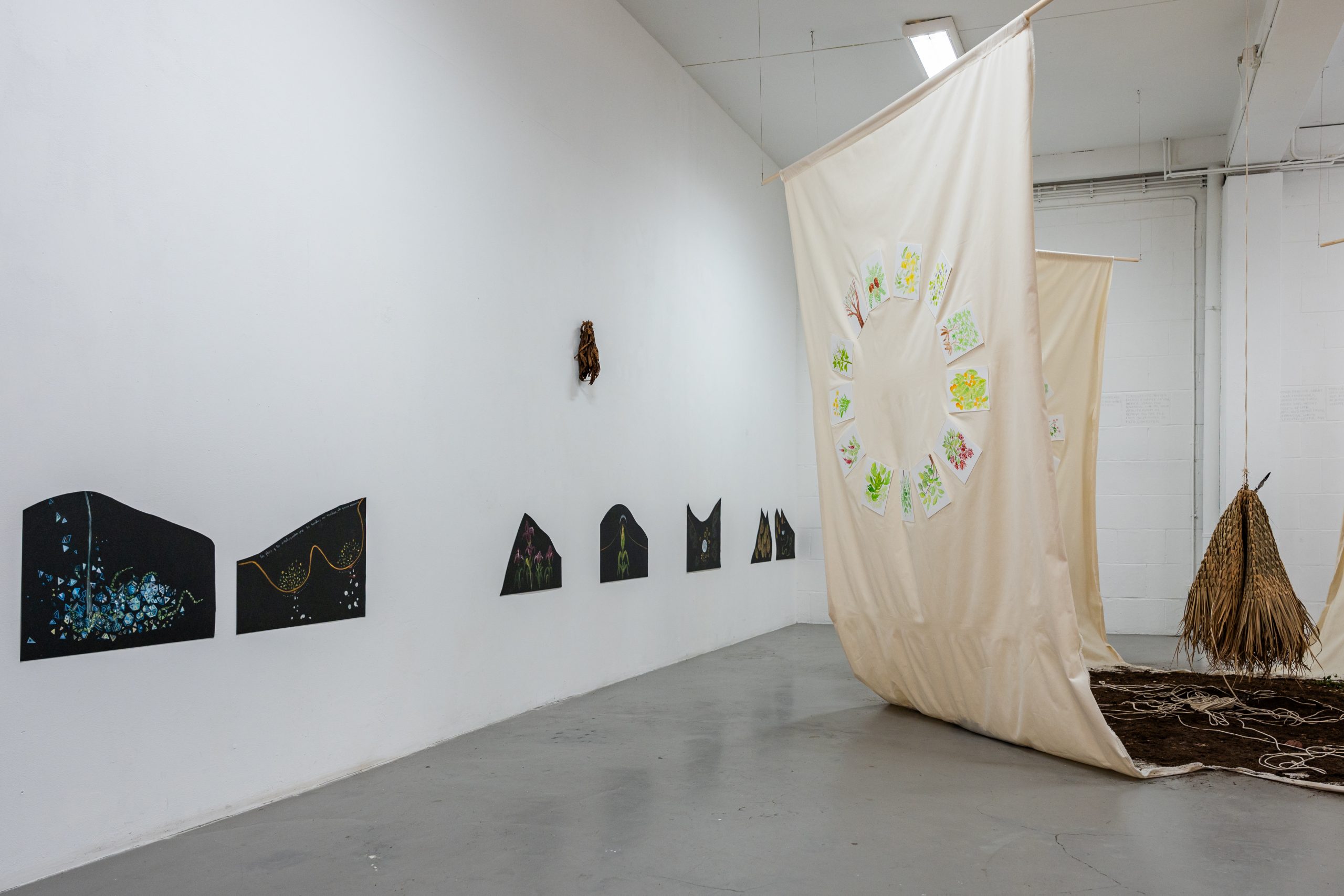

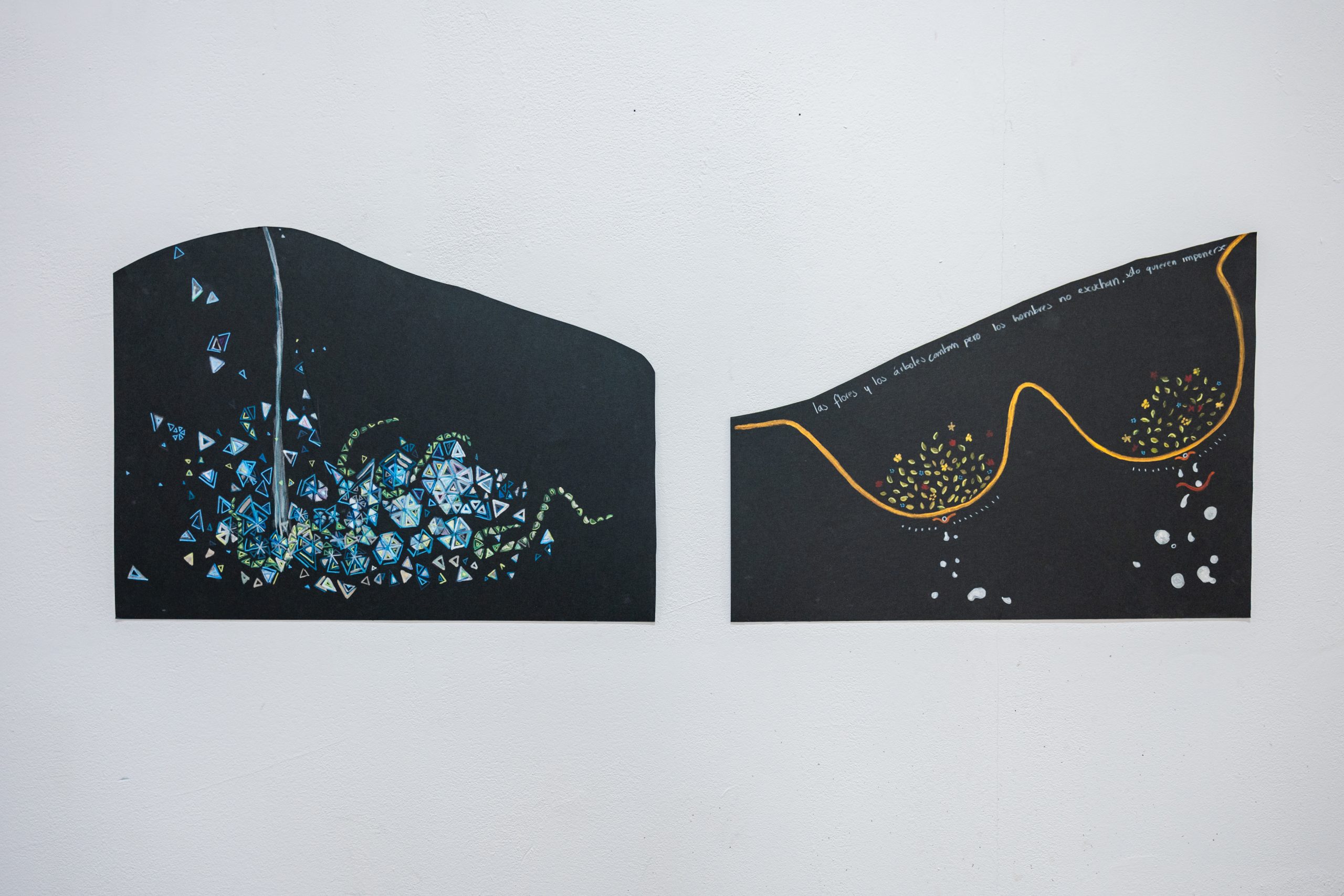

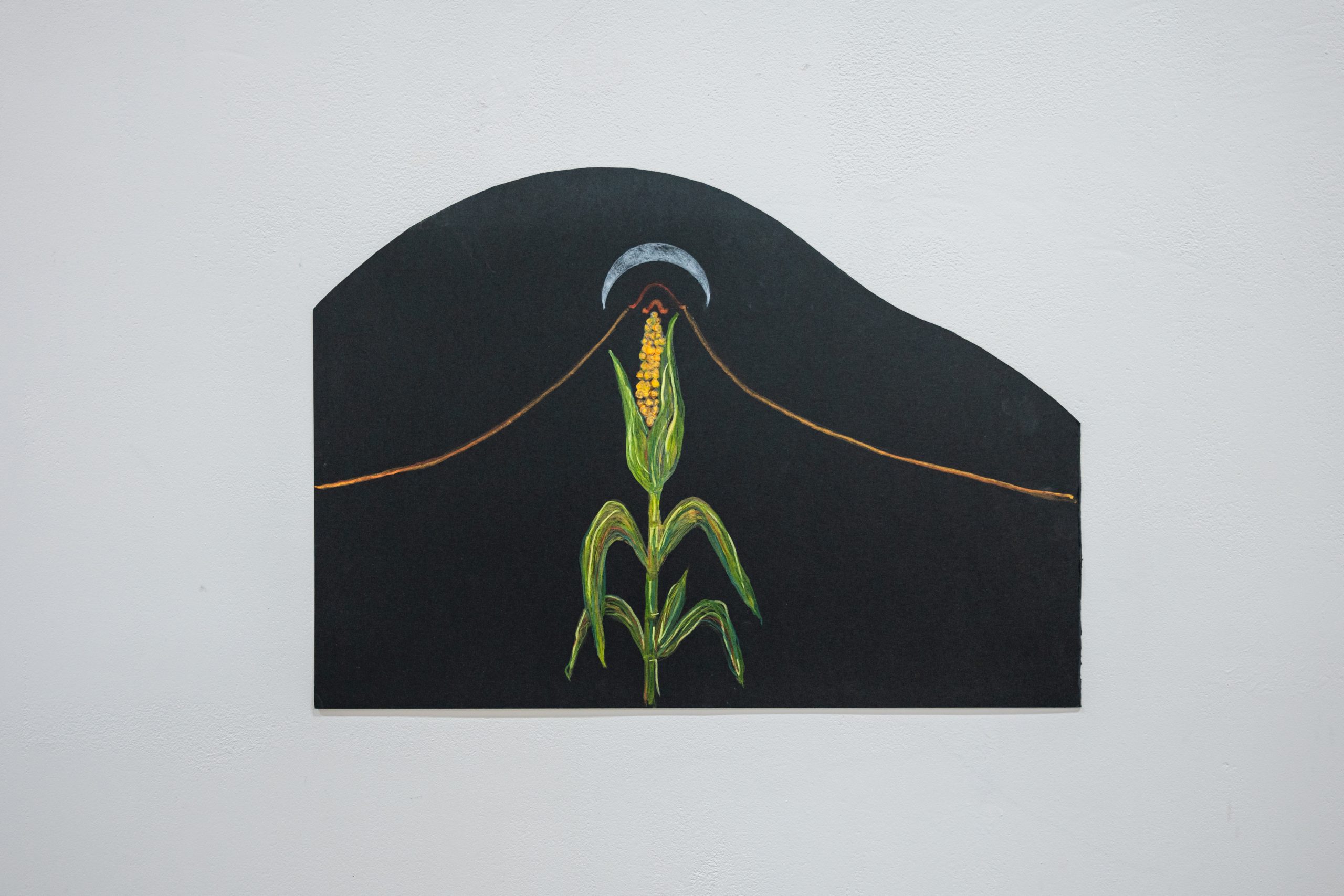


Tlazolteotl es la madre transformadora en la cultura nahuatl, la madre de la medicina, de las plantas, de la composta, del suelo, el temazcal, el tejido, el algodón, la que provoca la lujuria y la perdona. Vive en el rumbo del oeste con sus cuatro hermanas que perdieron la vida en el parto, es la sangre que recorre nuestras venas , tlazol es amor, los españoles lo interpretaron como residuo, tierra. La devoradora de inmundicias, el amor transformador.

Tlazolteotl is the transformation mother, the compost, eating the dirt, is the love of earth, sexual and weat, temptress, weaving relationships, the medicine giver, the listener of the sins, the healer, the wise, the diviner, temazcal mother, corn mother.
INVOCATION TO TLALZOLTEOLT
I will listen to you, I will come to lick all your filth.
Ixhuina , take me, cleanse my flesh, pain, make me come and feel, cover me with your cotton, give me your blood, help me give birth, snake woman, take my pain, with every drop of sweat, with every moan. Fertile, abundant, orgasmic, seductive woman, earth, moon, carries the darkness, in her hand is the blue and yellow water, purifies and disappears dirt, transmits and shares, change everything.
Listen to my confessions, my secrets, protector of the desperate, of the lives of mothers, of births, of vaginas. Goddess of cotton, weave my broken threads, write the secrets of sinners, covered with the skin of a human victim and the tail of a snake. Queen of the transforming sacrifice that forgives sins, beautiful woman of cotton, goddess of healing, of plants, of sweat, of steam baths. Great fortune teller, give me the vision, mother of corn, mother of flowers, with the tail of a coral snake, the entrails and the feather of a turkey. Cleanse me with your earth, give me deep healing, between your open legs, make me reborn, with sacred plants sing in my ear with that dirty voice, while the stench transforms my body into fertile soil. Bite me, eat me, lick me, drink me, suck me, swallow me, listen to me, clean me, change me, take me out, let me grow leaves, let me turn into a fungus, let the microbes speak to me, let the bugs, flies and worms come, until I am light and fly in the feathers of the trees.
I hear the flowers, I hear the fruits, I hear your moans, I feel your heartbeats, the seed of your residue is born, in a spasm, life is born from your filth.
I give everything, I change everything, I take away everything, I heal everything, convulsing and crackling, everything heals.
Listen to the songs of death, listen to the pain of life, listen to the flower, listen to the mango, listen to the heart. The jicama sounds, the potato sounds, the cactus sings, the pineapple moans, suck, eat, enjoy, play, sing, jump, cry and laugh, writhe mortally, roll around in the dirt, you are the same, putrid and delicious. Feel the earth under your feet, mother I feel you under my feet, mother I am earth under your feet.
CO


Paisaje, una historia de Tlazolteotl
6 piezas de 45 cms x 30 cms cada una. 2024